
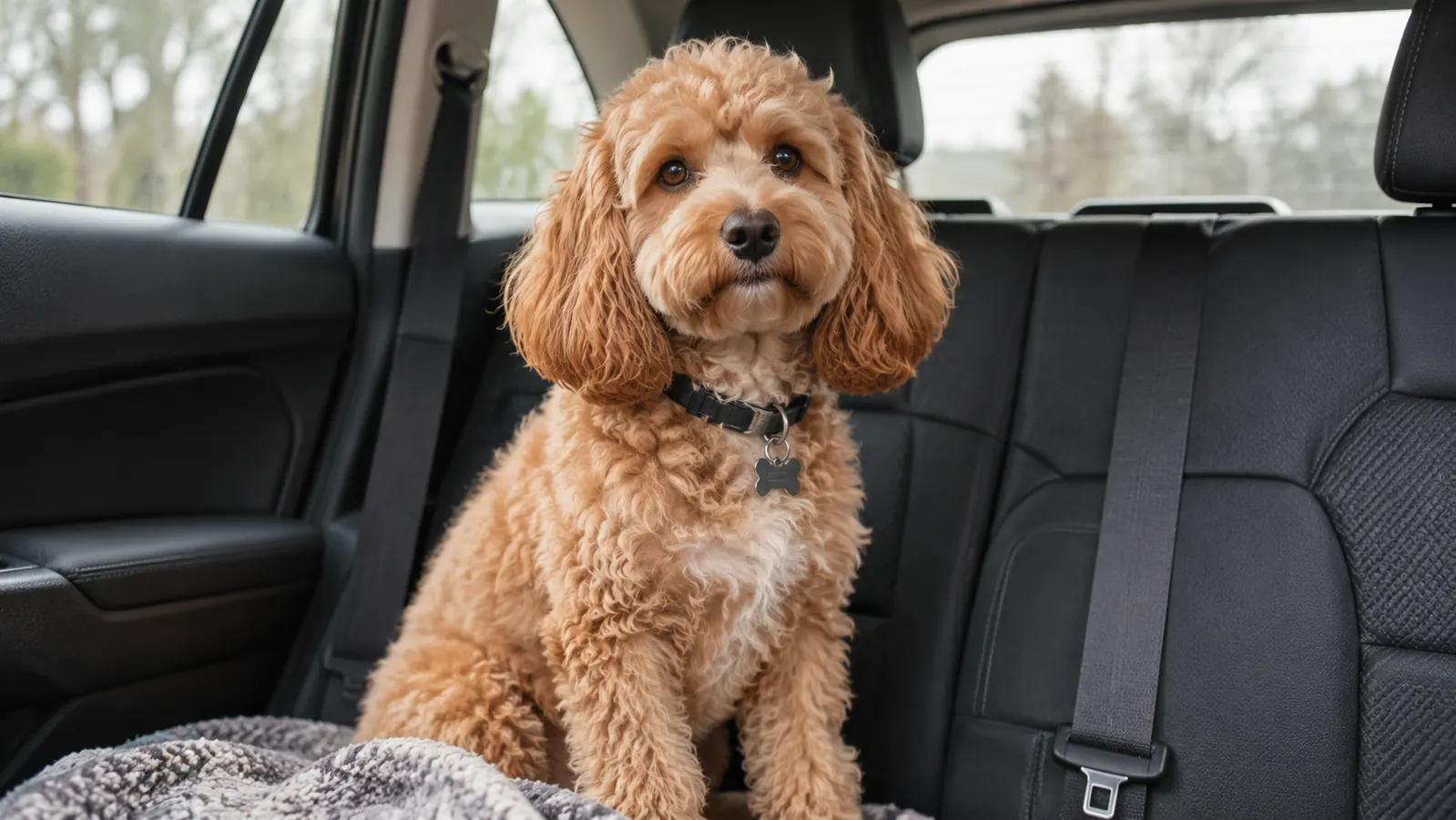
I bought the Kurgo Enhanced Strength Tru-Fit Smart Harness in March 2025, about a week after Wally slid off the back seat of my Forester and into the footwell. I had braked hard for a deer on a county road near our house and he went sideways off his blanket like a laundry basket in a turn. He was not hurt. He shook for twenty minutes, then asked for his dinner, and I sat in the driveway afterward feeling like the worst dog owner in Roanoke County. That is the whole reason this harness is in my life. It is also the reason I have kept it for twenty months even though several parts of it irritate me every single day.
I am not a trainer and I do not test gear for a living. I am fifty-nine, retired from a school office, and I have one sixteen pound Cavapoo who believes the car is a second living room. What I can tell you is what twenty months of daily use looks like. Which buckle sticks when the weather turns cold. Which strap has to be right or the whole thing rubs behind the front leg. Why I stopped putting it on him for a two minute walk to the mailbox. Some of this the listing covers in spirit. Some of it Kurgo would probably rather I left out.
The Quick Verdict
It does the car job well and the crash test certification is the real reason to buy it. It is also more harness than a sixteen pound dog needs for a walk around the block, and the buckles will fight your hands, especially in January.
Amazon Check Today's Price →If your dog rides loose on the back seat, this is the one I would buy again
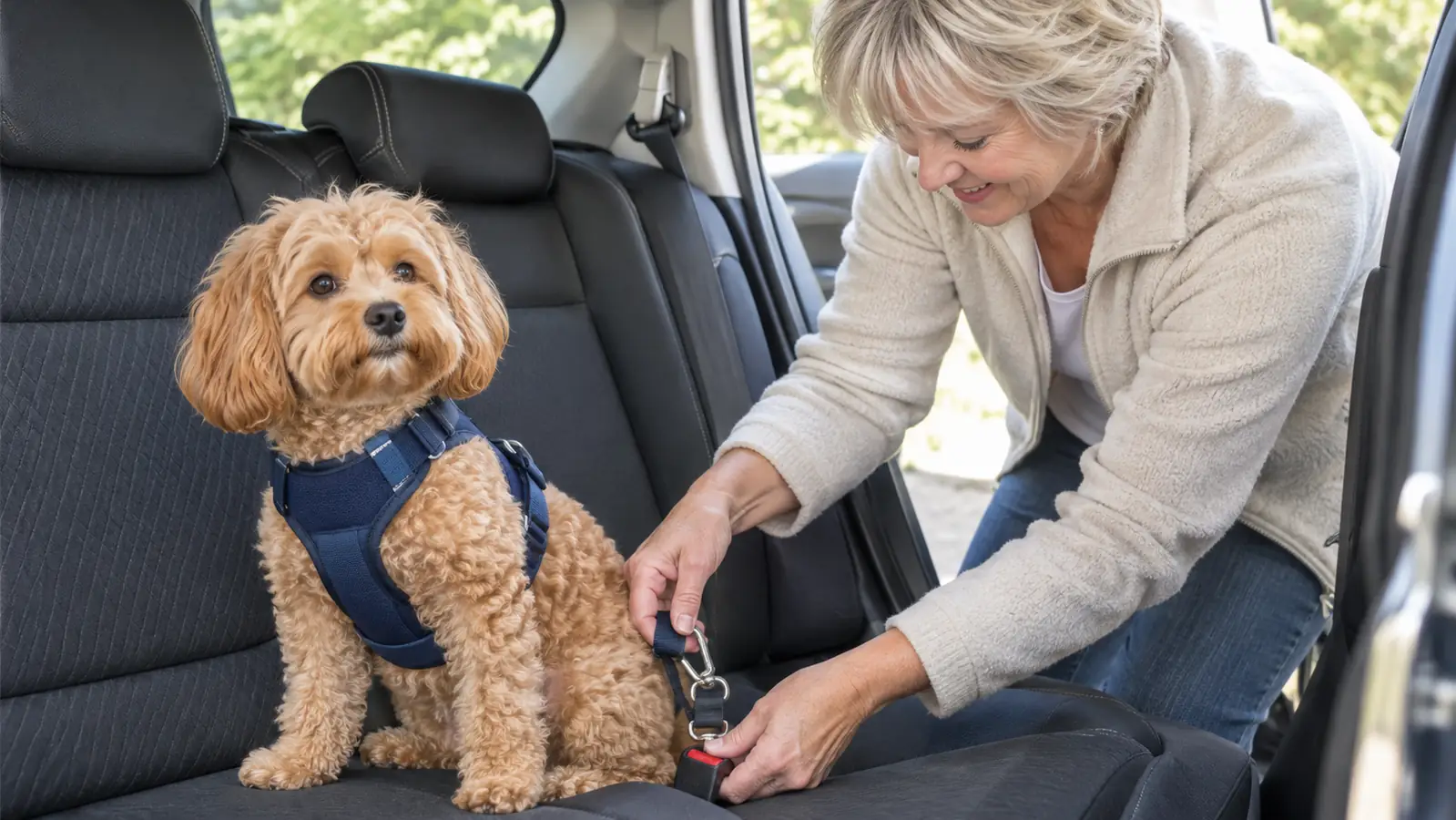
The Kurgo Tru-Fit comes with a 10 inch seatbelt tether and a steel carabiner, plus five points of adjustment so the fit is actually right instead of approximately right. It is the reason Wally stays on the seat and not in the footwell.
Amazon Check Today's Price on Amazon →The Short Version, Before the Details
Here is the shape of it. As a car restraint this harness does the job I bought it for, and I would buy it again tomorrow without hesitating. As a walking harness it is heavy, and on a small dog you feel that weight every time you bend down and lift him. The padding that makes it comfortable in a seat makes it warm and bulky on a twenty minute walk in July. And the buckles, which were stiff when the thing came out of the box, are still stiff twenty months later. That is the whole review in one paragraph. The rest of this is the detail that paragraph leaves out.
What Nobody Tells You Before You Buy It
The first thing nobody tells you is that five points of adjustment sounds like a number on a spec sheet and behaves like an evening of work. Until all five straps are set correctly the harness sits crooked, and a crooked harness on a curly coat rubs. I spent two evenings getting ours right, with a dog standing in my kitchen looking at me with the patience of a saint and the eyes of a hostage. The second evening was the one where it finally sat level on his chest and I could stop tugging at it. If you are not willing to do that work, buy something with fewer straps and accept a looser fit.
The second thing is the care instructions. Hand wash only. That matters more than it sounds, because a harness that goes in the car every day picks up road dust, dog hair and whatever the seat of a Forester collects in the fall. Ours goes in the laundry sink about once a month and air dries overnight over the basin. Skip it for two months and you will understand why the instructions exist. A dog wears this against his chest, so a grubby harness is not a small thing, it is the thing touching him all day.
The third thing is that this is really two products in one package and they are not equally good. As a car restraint it is excellent. As a walking harness it is fine, and fine is the honest word for it. The Kurgo listing sells it as a daily use harness that also handles car duty, and that framing is fair, but most owners will find they care a great deal about one of those jobs and only tolerate the other. Know which one you are buying for before you order.
How I've Used It
Wally rides in this Kurgo harness every time we get in the car. Back seat, passenger side, never the front, and I clip the 10 inch tether that comes in the box from the harness to the seat belt. The steel carabiner on the end of that tether is the part I trust most. It has a solid feel that the plastic buckles on the harness itself do not, and after twenty months of clipping and unclipping it still closes with the same snap it had the first week. When I reach back to hook him up, that is the piece my hand is checking, not the buckles.
Ten inches is a good length for a dog his size. He can stand up, turn around, sit and lie down on the seat, and he cannot get far enough forward to be in my way or far enough down to tangle himself in the footwell. He cannot reach the window either, which he has opinions about and I do not. I have never had to unwrap him from anything. That sounds like a small thing until you have driven four miles with a dog who has wound himself into a seat belt, which is what used to happen with the blanket.
It is also his walking harness. Two walks a day, about twenty minutes each, around our neighborhood on a plain six foot leash. That is the job where my complaints live, and none of them are about safety. They are about bulk. He weighs sixteen pounds. The harness has a padded chest plate, which I am sure is comfortable, and on a dog his size it makes him look like he is wearing a small vest. The whole assembly adds weight to a body that weighs less than a bag of sugar, and I feel it when I lift him into the car.
We take it off the moment we get home. That is not cosmetic. Straps left on a curly coat rub, and the place they rub is the armpit, which is exactly where a Cavapoo mats first. Our groomer, Dana, has told me more than once that harness and collar friction is half of what she sees on curly-coated dogs. Leaving it on all day would have cost me money at the groomer and cost him comfort, so the harness comes off at the door and hangs on the hook by the garage. Twenty months of that habit is the single best thing I have done for his coat.
The Fit Took Two Evenings, Not Two Minutes
I ordered a Small, and I did not guess. I measured him and used the maker's size chart, and I would tell anyone to do the same. This is not a harness you can eyeball. Small fits him with a little room left in the adjustment straps. If I had gone up a size on instinct the chest plate would have hung past his ribs and the whole thing would have shifted every time he pulled. The size chart exists because this harness has five straps that interact, and one wrong call throws off all five.
Here is what the two evenings looked like, in case it helps. Neck straps first, so the chest plate sits high enough that it does not press on his throat. Then the two chest straps, one at a time, checking from the front that they were even. Then the strap behind the ribcage. Then the whole thing again after a walk, because a harness that sits right standing still can shift once a dog starts moving and sniffing. If that sounds fussy, it is fussy, and it is also the difference between a harness that rubs a bald patch behind the leg and one that does not.
The steel carabiner is the piece my hand checks every time I reach back to hook him up. Twenty months in, it closes with the same snap it had the first week.
The Walk and the Car Are Different Jobs
This is the thing I most want to say to another small dog owner. A car restraint needs to be overbuilt. It needs to hold a body in a seat, and that means webbing, buckles and a connection point that does not fail. A walking harness needs to be light, because the dog carries it for twenty minutes twice a day and nobody is braking for a deer. The Kurgo harness is built for the first job. When you use it for the second, you are carrying a car seat on a neighborhood walk.
That does not make it wrong. It makes it a compromise, and the compromise is worth it if you want one piece of gear instead of two hanging by the door. We did, for a long while. Around the eighteen month mark I started leaving it on the hook for short trips and using just a collar for the mailbox. Not because the harness failed at anything, but because for a four minute walk it was more work to put on than the walk was worth.
Two Years In: What Held Up and What Didn't
The stitching has held. The webbing has held. The padded chest plate is still intact after about a wash a month, and before that a summer of him wading in a shallow creek and riding home damp in the back seat. The steel carabiner has held. Those are the parts that matter for the car, and none of them have given me a moment of doubt in twenty months of use. I expected the padding to flatten and it has not.
What has not held up is the buckles. They were stiff when new and they are stiff now, and they are worse in January when the garage is cold. I brace the harness against my knee to click them closed, and I always do the neck buckle first, because it is the one that has to be right before anything else works. Younger hands would not notice this. Mine are fifty-nine year old hands that spent thirty years on a school office keyboard, and they notice every time.
The other honest note is the weight. On a sixteen pound dog this is a lot of harness. Buckles, webbing, metal, padding, all of it. The Kurgo build is closer to a seat belt than to a walking harness because it is meant to act like one, and in the car that is exactly what I want on him. Picking him up off the vet's scale with it on, though, I feel every ounce of it, and so does my back.

The Matting Question
If you have a Cavapoo you already know this is the section that matters. Any harness presses on the armpit and behind the shoulder, and those are the two places a curly coat tangles first. What I found over twenty months is that this harness is no worse than any other on that front, and it is only a problem if you leave it on. Ours comes off at the door, every time, without exception. Sunday evenings I brush him out with a slicker and go over the armpits with a steel comb, and the combination has kept the mats small.
Where I would be careful is a dog who wears a harness all day, every day, indoors. This one is padded enough that it will not cut in, but padding against a curly coat for hours is how you get a felted patch under the leg before you notice it. If your dog needs a harness on in the house for some reason, check the armpits with your fingers every couple of days. That is not a knock on Kurgo. It is how harnesses and curly coats work together.
What I Liked
- Crash test-certified, and it connects to the seat belt with a steel carabiner tether instead of a plastic clip
- Five points of adjustment give a genuinely correct fit if you take the time to set them
- Webbing, stitching and padded chest plate all still intact after about twenty months of daily use
- The 10 inch tether lets a small dog stand, sit, turn and lie down without tangling
- Hand wash only, and it air dries overnight so a monthly wash is easy to keep up with
- Manufacturer's lifetime warranty and it comes with the tether in the box
Where It Falls Short
- Buckles are stiff and get worse in cold weather
- Bulky on a sixteen pound dog, and you feel the weight when you lift him
- Two evenings of strap adjustment before the fit is right
- Hand wash only, so a monthly sink wash is part of owning it
- More harness than a short neighborhood walk requires, which is why ours comes off at the door
Booster Seats, and What I Decided
I thought about a booster car seat before I bought this. I looked at them in a store, picked one up, set it back down, and went home to think. I have never owned one and I am not going to pretend I have, so take this as the reasoning of someone who only handled them on a shelf. A booster seat takes up an entire seat. We have a Forester with a back seat that also carries groceries, a folding chair for the church hall, and my husband Tom's fishing gear. A harness folds onto a hook and takes up nothing.
That was the deciding factor, not safety, and I want to be honest about that. A booster seat may well protect a dog better in some situations. I do not know that and I am not going to claim it either way. What I know is that a harness I use every single time beats a seat I leave in the garage because it is in the way of the groceries. The best restraint is the one that actually gets used.
The Crash Test Claim, Stated Honestly
The listing says crash test certified. That is all I am going to say about it, because that is all I know. I have not run a test. I cannot describe what one involves. I have no idea what any particular number attached to that claim means, and I am not going to guess on the manufacturer's behalf. What I can tell you is that in twenty months there has been one hard stop, the one that led to the purchase, and there has not been a second. I have never been in an accident with him in the car.
So I am trusting the certification, not verifying it. What I will not do is promise you that this harness prevents an injury. No harness can promise that, and anyone who does is selling reassurance rather than a product. What I will say is that a dog clipped to a seat belt is a different situation from a dog loose on a blanket, and that difference is the entire reason I bought the Kurgo harness that week instead of thinking about it for another month.
The Daily Routine, Twenty Months In
The harness lives on a hook by the garage door. In the morning it goes on in the driveway, we walk twenty minutes, and it comes off at the door. Same in the afternoon. When we are going somewhere in the car, it goes on in the house, he trots out to the Forester, and I clip the tether to the seat belt before I close his door. Twenty months of that and it is muscle memory. I can put it on him in the dark now, which matters in December.
Once a month it goes in the laundry sink with a little soap, gets rinsed, and hangs over the basin to dry overnight. That is the whole maintenance routine. No washing machine, no dryer, nothing that would break down the webbing or the padding. If you are the sort of person who will actually do a monthly hand wash, you are fine. If you are not, the harness will get grim, and it sits against a dog's chest for hours at a time.
Who This Is For
This is for the owner whose dog rides loose and who has had one of those moments, where you brake and then look in the mirror and your stomach drops. It is for the owner who wants one harness that covers the car and the walk and does not mind spending an evening getting the straps right. It suits hands that can still close a stiff buckle. On a dog from about twelve pounds up, the bulk is manageable, and a Small fit my sixteen pound dog with room left in the adjustment. If that describes your situation, the Kurgo Tru-Fit is a reasonable place to start.
Who Should Skip It
Skip it if your dog is smaller than Wally, or if you only need something for walks. A walking harness does not need to be built like a seat belt, and buying that construction to use it on a leash is buying for a job you are not doing. Skip it if stiff buckles will be a daily fight, if a monthly hand wash is a chore you know you will not keep up with, or if your dog already has a harness that fits him well. A harness that already works is not improved much by this one.
And if you are only mildly worried about the car, here is what I would do now, knowing what I know. Start with a short seat belt tether and the harness you already own, and see whether you actually use it. If you do, buy the overbuilt one and do the two evenings of adjustment. If you do not, you have saved yourself the strap work and a stiff buckle in January, and you have learned something honest about how you drive with your dog.
One hard stop was enough for me. The harness was in the car that same week.
Five points of adjustment, a padded chest plate and a 10 inch seatbelt tether with a steel carabiner, all in the box. Twenty months of daily use later, the Kurgo Tru-Fit is still the harness hanging by my garage door.
Amazon Check Today's Price on Amazon →