
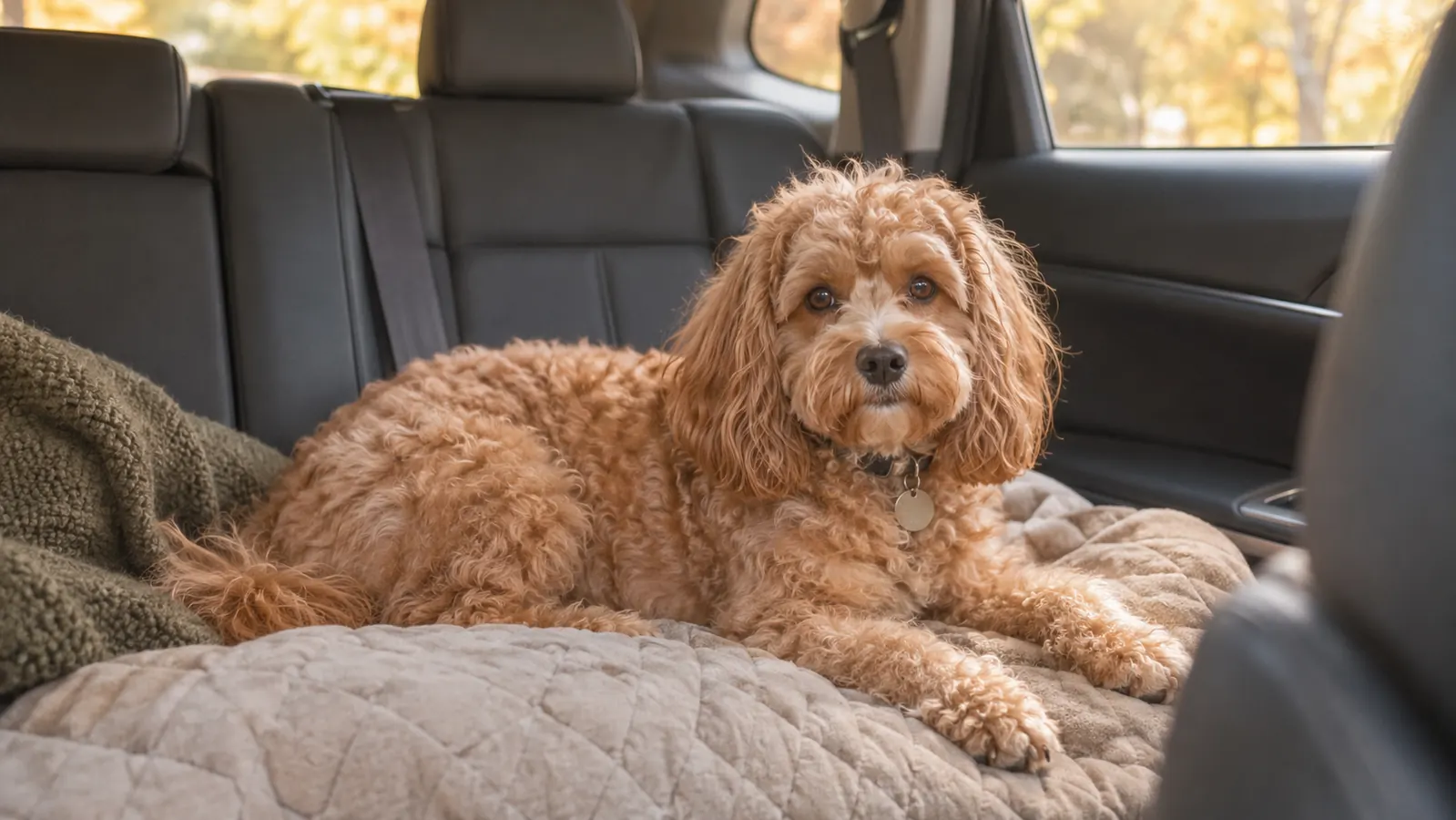
Wally slid off the back seat in March 2025. I had braked hard for a deer on a county road a mile from the house, and he went off the blanket he was sitting on and down into the footwell. He was not hurt. He shook himself, gave me a look, and I drove the rest of the way home with my stomach in a knot. I ordered the Kurgo Enhanced Strength Tru-Fit Smart Harness that week. It is the small size, and he has worn it nearly every day since.
Twenty months is long enough to know a thing. Wally is a 4-year-old Cavapoo, 16 pounds, apricot curls, long floppy ears. He rides in the back seat of a 2019 Subaru Forester and walks about 20 minutes twice a day around the neighborhood. He is not a puller and he is not a bolter. I bought a car harness because of the footwell. I kept using it on the sidewalk because taking one harness off and putting a different one on twice a day was more fiddling than I wanted in my life.
The Quick Verdict
A genuine car harness that does double duty on the sidewalk. Worth the two evenings it takes to fit it on a 16 pound dog, though it is more harness than a quiet block walk asks for.
Amazon Check Today's Price →Twenty months, one hard brake, and he has not left the seat since
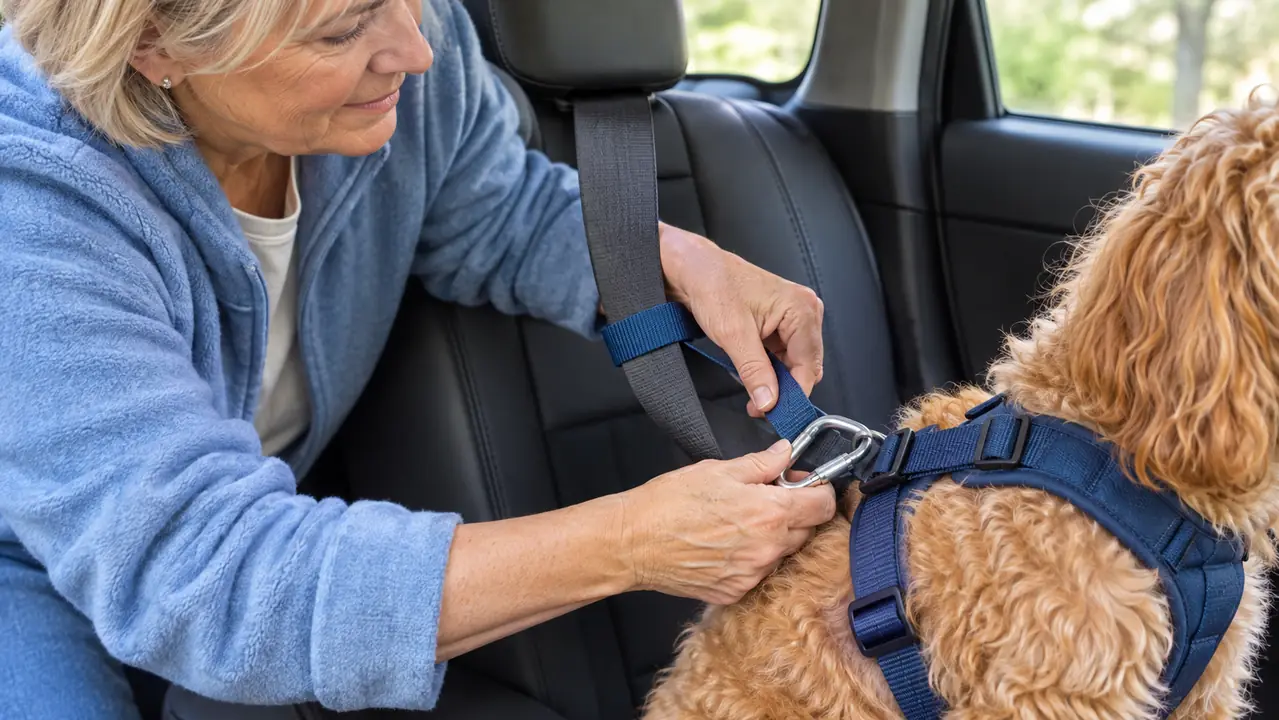
The Kurgo Tru-Fit clips to the seat belt with the tether and steel carabiner that come in the box. Getting the five adjustment points right takes patience, and after that it holds.
Amazon Check Today's Price on Amazon →How I've Used It
Every car trip he goes in the back seat on the passenger side. Never the front, and I will not budge on that with a dog this size. The harness comes with a 10-inch seatbelt tether and a steel carabiner. I loop the tether around the seat belt, clip it to the ring on the back of the harness, and we go. Four seconds. Then he lies down. Grocery store, vet, Dana the groomer every six weeks, my sister in Salem twice a year.
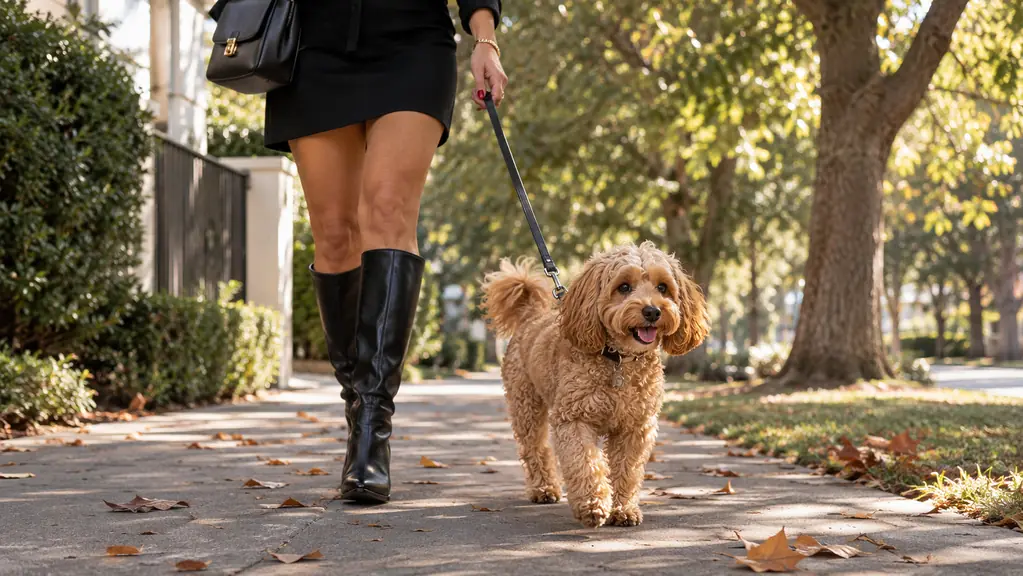
The walking half is the same harness, on a plain 6-foot leash clipped to the ring on his back. About 20 minutes twice a day, the same loop past the mailbox and the yellow house with the loud beagle. It comes off at the threshold when we get home and goes back on before the morning walk. Because it is already on him in the car, it made sense to keep using it on foot rather than own two harnesses. On a 16 pound dog with short legs, every strap you own has to earn its place in the drawer by the back door.
One thing I did not expect. He does not wear it in the house, ever. Straps that sit under the front legs will work the coat in the armpit into mats if they stay on all day, and Wally mats there anyway. So the harness lives on a hook by the back door, goes on in the driveway, comes off at the threshold, and I brush his armpits and behind his ears on Sunday evenings. Twenty months of that and the coat under his front legs is no worse than it was before.
What the Five Points of Adjustment Actually Do
The harness has five points of adjustment. That sounds like a listing line until you are the one standing over a wriggling dog trying to get the padded chest plate to sit flat. The girth strap around his ribs has to be snug enough that he cannot back out of it, which is snugger than felt right to me at first. The chest straps set where the plate sits on his breastbone. The shoulder straps set the length. It took two evenings, with treats, and about four tries before I stopped finding it crooked in the hallway mirror.
The plate itself matters. It is padded, and it spreads pressure across his chest instead of concentrating it on a single strap over the windpipe. When he does hit the end of the leash after a squirrel, he coughs less than he did in the cheap strap harness we had when he was a puppy. That is not a measurement. It is one woman watching one dog.
The buckles are stiff. They are the heavy side-release kind, and the listing gives the material as alloy steel, which is part of why this feels like equipment rather than clothing. I have arthritis in my right thumb and I need two hands to open the chest buckle when he is excited about the park. Small annoyance in the driveway. Bigger one in the rain.
The Car Part, Which Is Why I Bought It
The listing says crash test certified. I am not going to dress that up, because I cannot tell you what happens to a 16 pound dog at highway speed and I would be making it up if I tried. What I can tell you is what changed in the car. Before the Kurgo harness, Wally rode loose on a blanket. After it, he cannot get into the footwell, cannot climb through to the front, and cannot end up under the brake pedal. Those three things were the reason I bought it.
He settles in about five minutes now. The first month he stood and stared at me through the gap in the seats, and I pulled over twice on the way to Roanoke to settle him. What fixed it was a bed on the seat and the same order every time. Harness, tether, click, go. He is 4, he is food motivated, and he worked out that the car means the vet or the park, and either way he wants to be there.
I have never owned a booster car seat, so I will not pretend to compare from experience. I have looked at them in a store. They raise a small dog so he can see out the window, and if your dog spends every ride with his nose against the glass and gets carsick, the seat is probably what you want. The harness is for keeping a dog in one place. It does not lift him.
The tether is 10 inches, which is enough for him to stand, turn around once, and lie down, and not much more. He cannot reach the far window. In the Forester that is fine. If your back seat is narrower than mine, put the dog in it and watch him before you commit, because a tethered dog who cannot get comfortable will whine the whole way to the vet.
What 16 Pounds Feels Like in It
Here is where I am honest with you. This is a lot of harness for a small dog. The listing gives a weight range up to 75 pounds, and you can feel that when you open the box. On Wally the padded plate covers most of his front and the webbing goes around his ribs twice. He looks like he is wearing safety equipment, because he is. On a 60 pound dog this would look proportionate. On a Cavapoo it looks like a borrowed coat.
He does not mind it, which surprised me. He trots in it, he does his business in it, and he has never once tried to chew it off. The weight is not the problem. The buckle sits close under his armpit and there is a bit of webbing that ends up under his chest. In 20 months I have not seen a red mark. I check every time I take it off, hand under the front legs on both sides.
For a 20 minute walk around the block it is more than he needs. A plain strap harness would do the sidewalk job. I use this one because it is already the thing in the car and because the padded plate keeps him from coughing when the neighbor's beagle startles him. If your dog only ever walks the yard, this is overkill and I would say so to your face.
Washing It, and What the Armpits Look Like
Hand wash only. That is on the care label and it is not a suggestion. Once a month I fill the laundry sink with cool water and a little dog shampoo, work it through the webbing with my hands, rinse until the water runs clear, and hang it over the shower rod overnight. The padded plate takes longer to dry than the straps. Put it back on a damp dog on a cold morning and he will be miserable and he will tell you about it.
Twenty months of monthly washing and the stitching has held, the buckles have held, the carabiner has held. The webbing has softened, which is what happens to anything that lives in a car in Virginia for two summers. The maker lists a lifetime warranty, and I have not had to test it, which is the only useful thing I can say about a warranty.
One more thing about the fit that took me a while to understand. The girth strap seems to relax a little over a few weeks of daily use, so I check it with two fingers under the band about once a month when I wash it. Not because the buckle slips, but because the webbing gives. That is ten seconds of work and it is the difference between a harness that holds and a harness that shifts halfway through a walk.
What It Does Not Do
It is not a training tool. Wally does not pull, so I cannot tell you it stops a dog from pulling, and I would not believe anyone who told me a harness trained their dog. A harness holds. The training is still yours, on the sidewalk, with a pocket of kibble and some patience.
It does not replace a crate or a barrier for a dog who chews in the car. Wally does not chew, but I have known dogs who would eat a seat belt given half a chance. And it does not come off in one motion. Two buckles, a strap, and the tether. If you are rushing out the door every morning, that counts for something.
What I Liked
- Five points of adjustment, and once set, the fit held for 20 months without redoing it
- The padded chest plate sits flat on a small chest and cuts down on coughing at the end of the leash
- Comes with a 10-inch tether and steel carabiner, so there was nothing else to buy for the car
- Has held up to monthly hand washing and two walks a day through two Virginia summers
- Does double duty. One harness in the car, the same one on the sidewalk
Where It Falls Short
- A lot of harness for a 16 pound dog. It is built for dogs up to 75 pounds
- The buckles are stiff and take two hands when the dog is excited
- Two evenings of fiddling to get the five points right, and it was crooked twice before I did
- Hand wash only, and the padded plate takes overnight to dry
- Does nothing about pulling on its own. It holds the dog, it does not teach him
Before the harness he rode loose on a blanket. After it, he cannot get into the footwell, cannot climb through to the front, and cannot end up under the brake pedal. Those three things were the reason I bought it.
Who This Is For
If you drive with a small dog loose on the back seat and it has ever made your stomach drop, this is the plainest fix I know. It is for the person who wants one harness for the car and the sidewalk, and who is willing to spend two evenings getting five adjustment points right. It is also for the dog who does not mind wearing gear, and there are plenty who do not.
It suits a dog anywhere in the weight range the listing gives, up to 75 pounds. It suits an owner who keeps the car reasonably clean and does not mind a monthly hand wash in the laundry sink. And if you have an older dog with thinner skin, run your hand under the straps every time you take it off. That is good practice with any harness, not just this one.
Who Should Skip It
Skip it if your dog is never in the car. A car harness living on a hook is a waste of a good harness, and a plain walking harness would serve you better for less money and less fuss. Skip it if you are shopping for a training tool, because this is not one. Skip it if you want the dog up where he can see out the window, because that is a booster seat, not a harness. And skip it if two evenings of fitting sounds like two evenings you will not actually spend. A harness set wrong is worse than no harness, because it rubs.
I would also hesitate for a very small dog, under about 12 pounds. Wally is 16 and this already looks like a great deal of gear on him. On a 9 pound dog I would be looking at something lighter.
If your dog still rides loose on the back seat, this is the least complicated fix I have found
Twenty months, two walks a day, one hard brake on a county road. The Kurgo Tru-Fit is still on the hook by my back door and still doing both jobs.
Amazon Check Today's Price on Amazon →