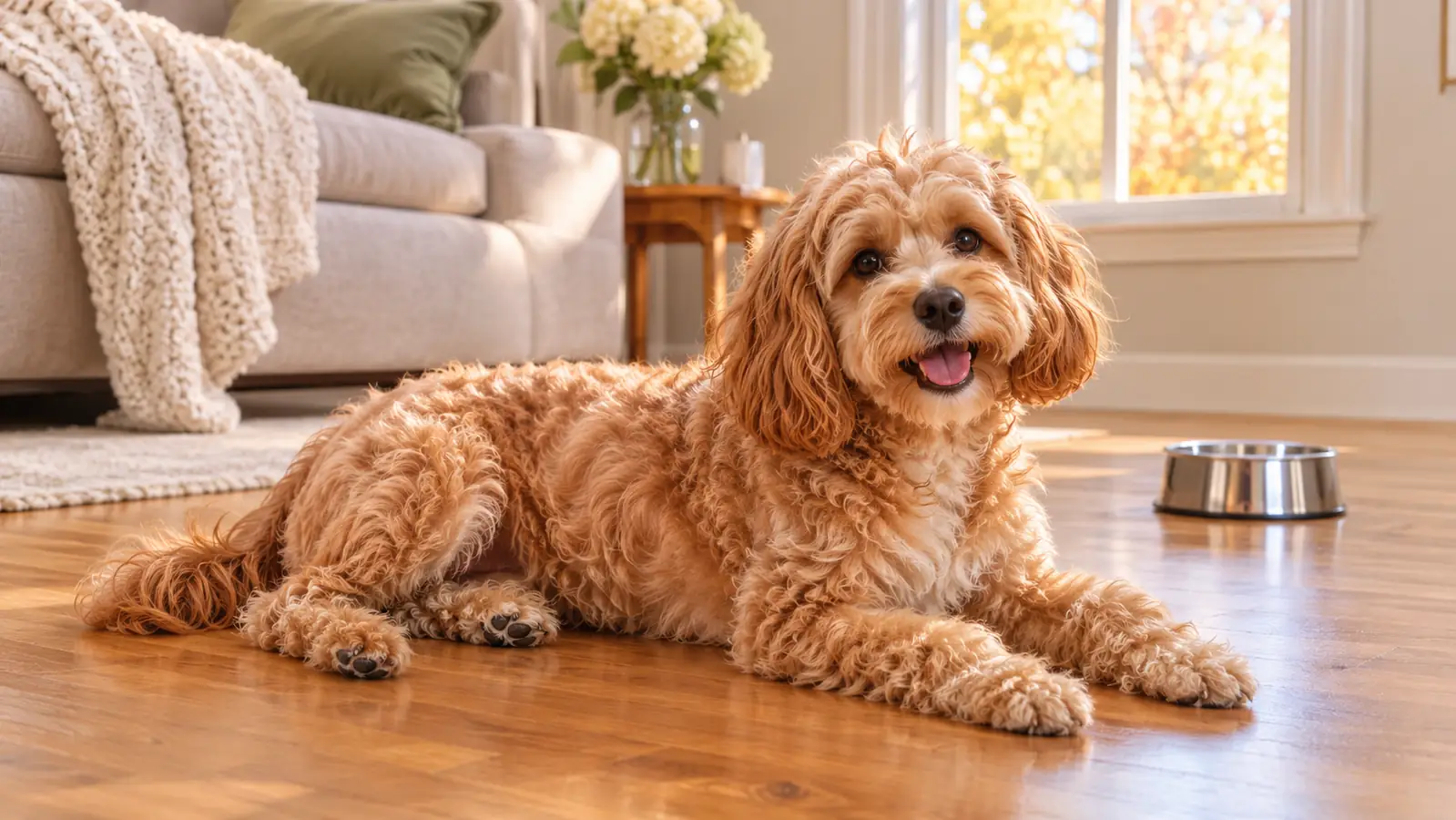
By February I could smell Wally's breath from the other end of the couch. Not the ordinary dog smell you expect when a 16 pound Cavapoo puts his chin on your knee. Sour. Sharp. The kind of thing you notice, and then notice again ten minutes later, and then start turning over in your head at odd hours. He is four years old. He had his teeth cleaned under anesthesia in August 2025. I had already tried a finger brush and given up after a couple of weeks, because he clamped his mouth shut and turned his head away like I was offering him something poisonous. So I did what a lot of people do. I ignored it for a while and hoped it was a phase.
It was not a phase. What finally helped, and it helped slowly and only partly, was a water additive. Oxyfresh Premium Pet Dental Care Solution, a 16 ounce bottle of flavor free liquid that goes into his kitchen bowl, one capful, every morning. Eight months in, his breath is noticeably less sour. That is the whole of the claim I am making here. His tartar has not disappeared. He still needs the vet. But the smell that drove me to the computer in the first place is mostly gone, and the reason it worked is embarrassingly simple: it is the only dental habit in this house that I have managed to keep up with.
The version of dental care that actually happens every day
Sixteen ounces, flavor free, one capful in the bowl each morning. If your dog clamps his mouth shut at the sight of a brush, this is the door that stays open.
Amazon Check Today's Price on Amazon →The Five Steps, In Order
Step 1: Get the mouth looked at before you buy anything
Bad breath in a dog can come from a lot of places. Teeth, gums, the back of the throat, something he got into in the yard, and occasionally something with nothing to do with his mouth at all. I am not a vet and I do not diagnose. What I did was mention it at Wally's next appointment. Dr. Reyes lifted his lip, looked along the gum line, checked for anything loose, and told me the smell was coming from plaque on his back molars, same as the year before.
That mattered, because it told me what I was buying was a maintenance tool and not a treatment. She put on a glove, lifted his lip on the left side, and ran a fingernail along the gum line above the big back molar. Slightly inflamed, she said, not badly. Then the same on the right, a look at the front teeth, and a feel along the outside of the jaw with two fingers to check for anything swollen. The whole thing took about ninety seconds and cost me nothing but the office visit I was already paying for. If your dog has a red gum line, brown tartar you can see from across the room, drooling he did not used to do, or he has started dropping food out of one side of his mouth, book the appointment instead of the bottle. A water additive will not fix a tooth that needs a dentist, and no product you can buy without a prescription will.
The other thing Dr. Reyes said, and I have repeated it to two neighbors since, is that anything you add to the water is the least effective of the options. The reason to use it anyway is that the effective options are the ones people quit. She was talking about me. I quit the finger brush in two weeks flat.
Step 2: Measure one capful into the bowl, and no more than that
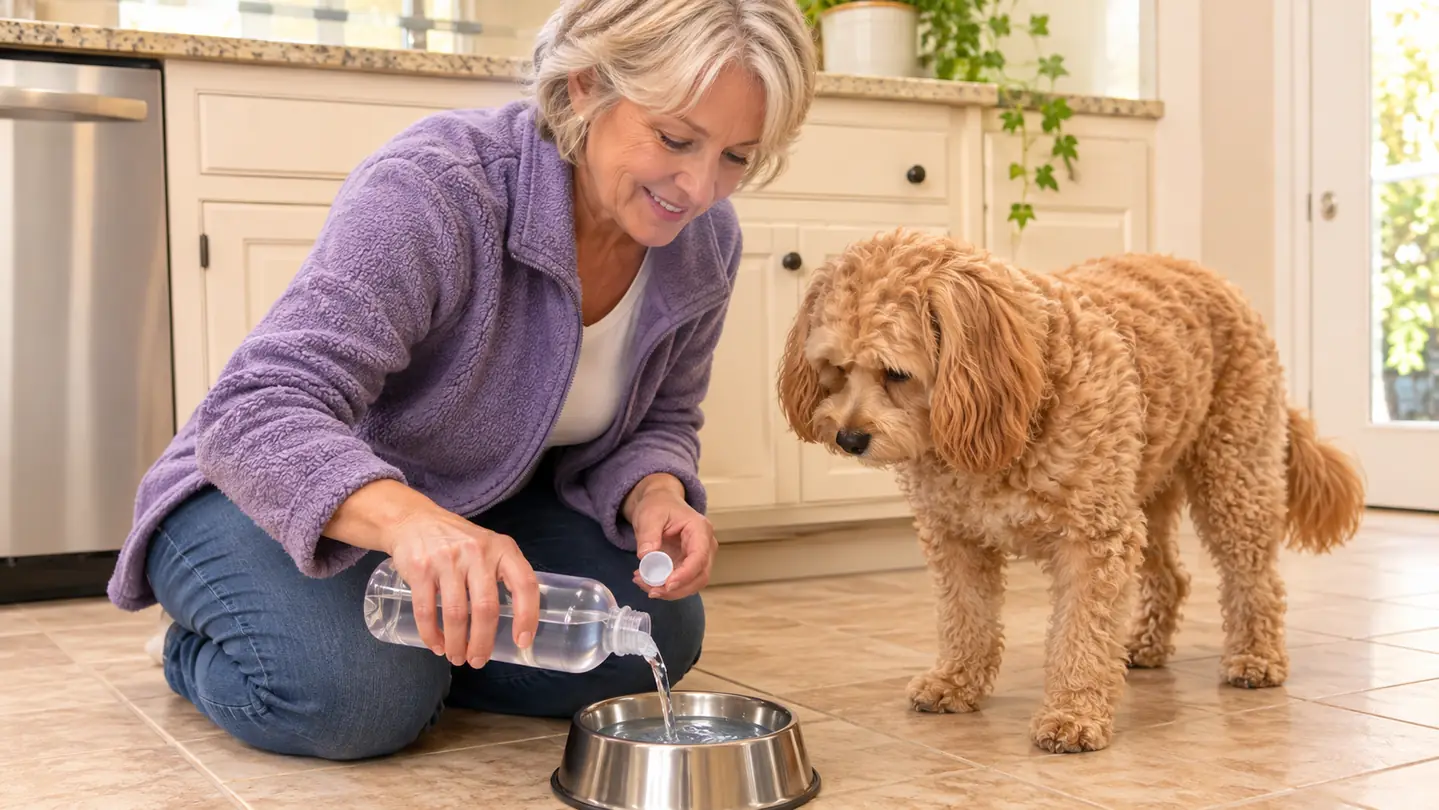
The label gives an amount, and the amount is measured in capfuls, not glugs. My first instinct was that if one capful was good, a cap and a half would be better. That is not how it works. More does not mean cleaner teeth. More means a dog who turns his nose up at his own water bowl, and a dog who stops drinking is a bigger problem than bad breath by a wide margin. I learned that the ordinary way. Somewhere in the first week I poured a heavy capful, the kind that slops over the rim, and Wally sniffed the bowl, looked at me, and walked off to drink out of the toilet instead. He came back to his own bowl the next morning once it had been dumped and refilled properly. I have measured it level ever since.
I keep the bottle in the cabinet above his bowl, which is a plain stainless steel one that sits on the kitchen floor by the back door. I measure over the sink, not over the bowl, because I am clumsy and a sloshed capful across the tile is a thing I have cleaned up twice now. The bottle is about the size of a shampoo bottle, roughly two and a half inches across and close to eight inches tall, so it fits on a shelf without being a production.
One note on the formula, because it was the deciding factor. It is flavor free, and it is mint free and tea tree free. Mint and tea tree are on the list of things you should not be putting in a dog's water, and plenty of breath products lean on mint anyway, because mint is what we associate with fresh breath in our own mouths. The Oxyfresh bottle does not. That is the reason I was willing to try it, and the reason Wally drank normally from the very first morning.
Step 3: Dump the bowl and start fresh every single morning
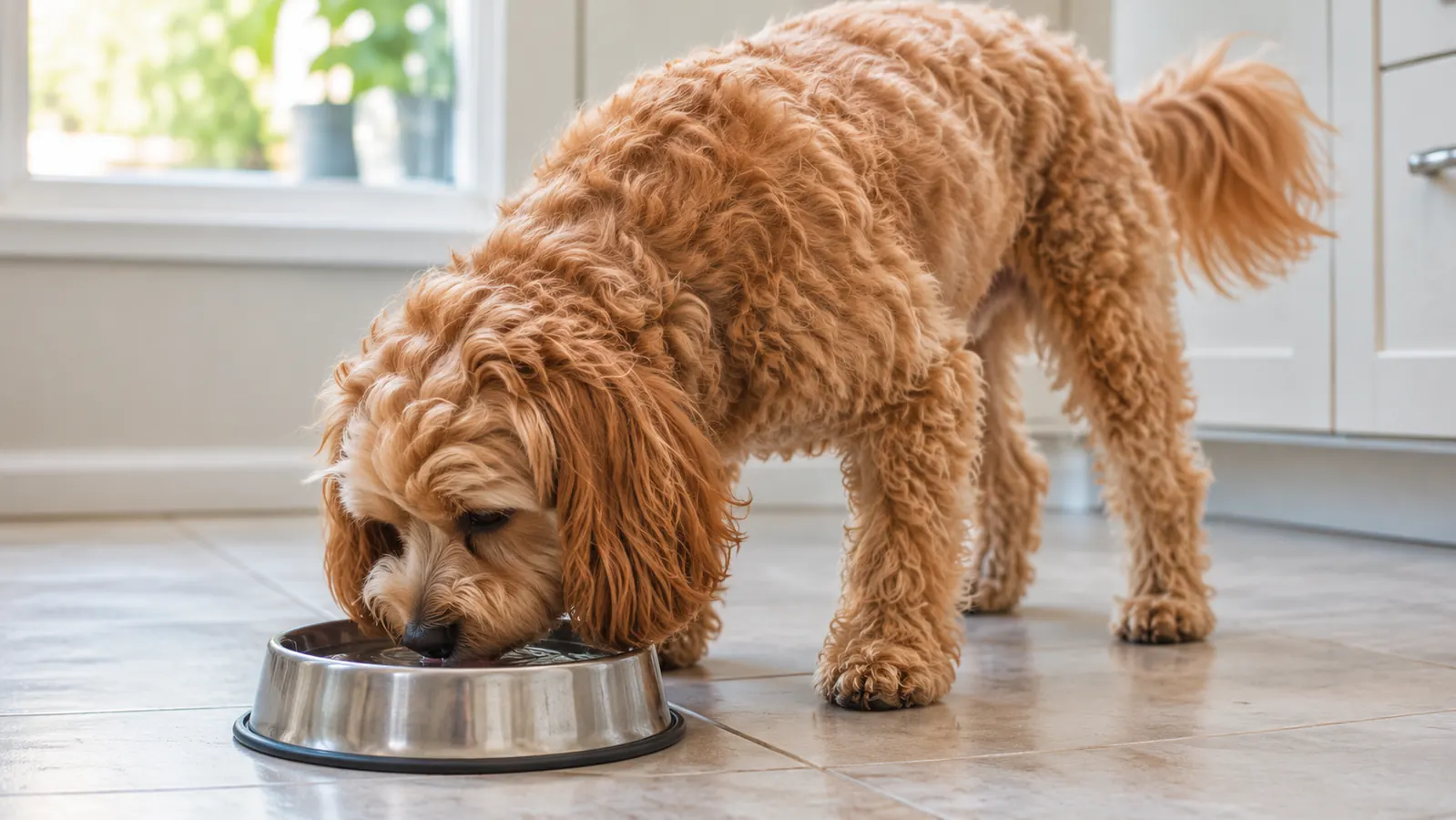
A water additive only does what it does while it is in the water, and water that has been sitting in a bowl on the kitchen floor since yesterday is not water I would drink myself. Every morning I dump what is left, rinse the bowl, refill it from the tap, and add the capful. That is the entire routine. It takes less than a minute, it happens before the coffee, and it is precisely why this is the only dental thing I have kept going for eight months. There is no dog wrestling in it and nothing to remember beyond the bowl itself.
Do not top up a half full bowl. I did that the first week and what you get is a bowl of water with an unpredictable amount of additive in it, which defeats the point of measuring. Dump it, rinse it, start over. His bowl also gets a proper wash with the dishes every couple of days, because a film ring around the inside of a water bowl is its own source of smell, additive or no additive. I keep a second identical bowl in the cabinet and swap them, so there is never a morning where the bowl is in the sink and the dog is standing there waiting on me.
By about two weeks the sharp edge of the smell was gone. Eight months later the tartar on his back teeth has not moved at all, and that is the honest picture.
Step 4: Give it two weeks before you form an opinion
Nothing happens in the first few days. I checked. I got down on the floor and smelled his breath like a woman with no dignity left, on day two, day four, day six, and it was the same sour smell. Around the two week mark it changed. Not gone, but the sharp edge of it was gone, and when he yawned in my face on the couch I did not flinch.
Two weeks is also long enough to learn whether your dog will drink the water. Most will, because the liquid is flavor free and there is nothing in it to object to, but a dog who refuses is telling you something and you should listen instead of arguing. I marked the start on the kitchen calendar, the first week of March, and put a dot on it every morning I got the capful in. There were eleven dots in the first fourteen days, and the three misses were all mornings when I was out of the house before seven. If yours will not touch it after three or four days, stop and think about a different approach. Letting him go thirsty to prove a point is not dental care.
Step 5: Keep the things that matter more, even the ones you are bad at
The additive is the easiest thing in our routine. It is also not the best thing in our routine. Brushing is the best thing. I have known that since 2022 and I have still never managed to make it a habit, because Wally clamps his mouth shut and I do not have the patience to win that fight every night before bed. If you can brush, brush. If you can manage three times a week, that is worth more than anything you can pour into a bowl.
He also gets one small dental chew on Saturdays and has since he was a year old. He finishes it in about three bites, which I suspect means it is doing less than the packaging suggests, but it is not nothing and he enjoys it. And he still goes in for a cleaning under anesthesia when Dr. Reyes says it is time. Nothing about the water changed that schedule and I would not expect it to.
What the Oxyfresh additive did was fill the gap between cleanings with something I would genuinely do every day. That is a small thing. It is also the entire reason it has stayed on my kitchen floor for eight months while the finger brush sits in a drawer by the sink, still in its package, quietly judging me.
What Else Helps
Three things, in the order they matter. A vet who looks in the mouth once a year, because that is the only way anything serious gets caught while it is still small. Brushing, if your dog will tolerate it, with a toothpaste made for dogs and never your own. And something to chew, because chewing works at the surfaces a brush and a water bowl both miss.
The thing I would not bother repeating is the finger brush, and I say that as someone who owns one. It was the right idea and the wrong dog. If yours sits still for it, that is better than what I am doing and you should keep at it. If yours clamps his mouth shut and buries his head in the couch cushions, you are not failing him. You just need a different door into the same room, and for us the door was the water bowl.
One honest caution before you buy anything at all. Bad breath that arrives suddenly, or comes with drooling, or a dog who chews on one side, or a dog who stops eating, is a vet question and not a shopping question. Call Dr. Reyes first. The bottle is for the dog whose mouth has been checked, whose teeth have been cleaned, and whose owner needs something small and repeatable to do on a Tuesday morning. That is exactly the dog I have.
One capful, one clean bowl, and about two weeks of patience
This will not replace a cleaning and it will not replace a brush. It is the thing I do every morning anyway, and eight months in, his breath is the reason I have kept it on the floor by the back door.
Amazon Check Today's Price on Amazon →