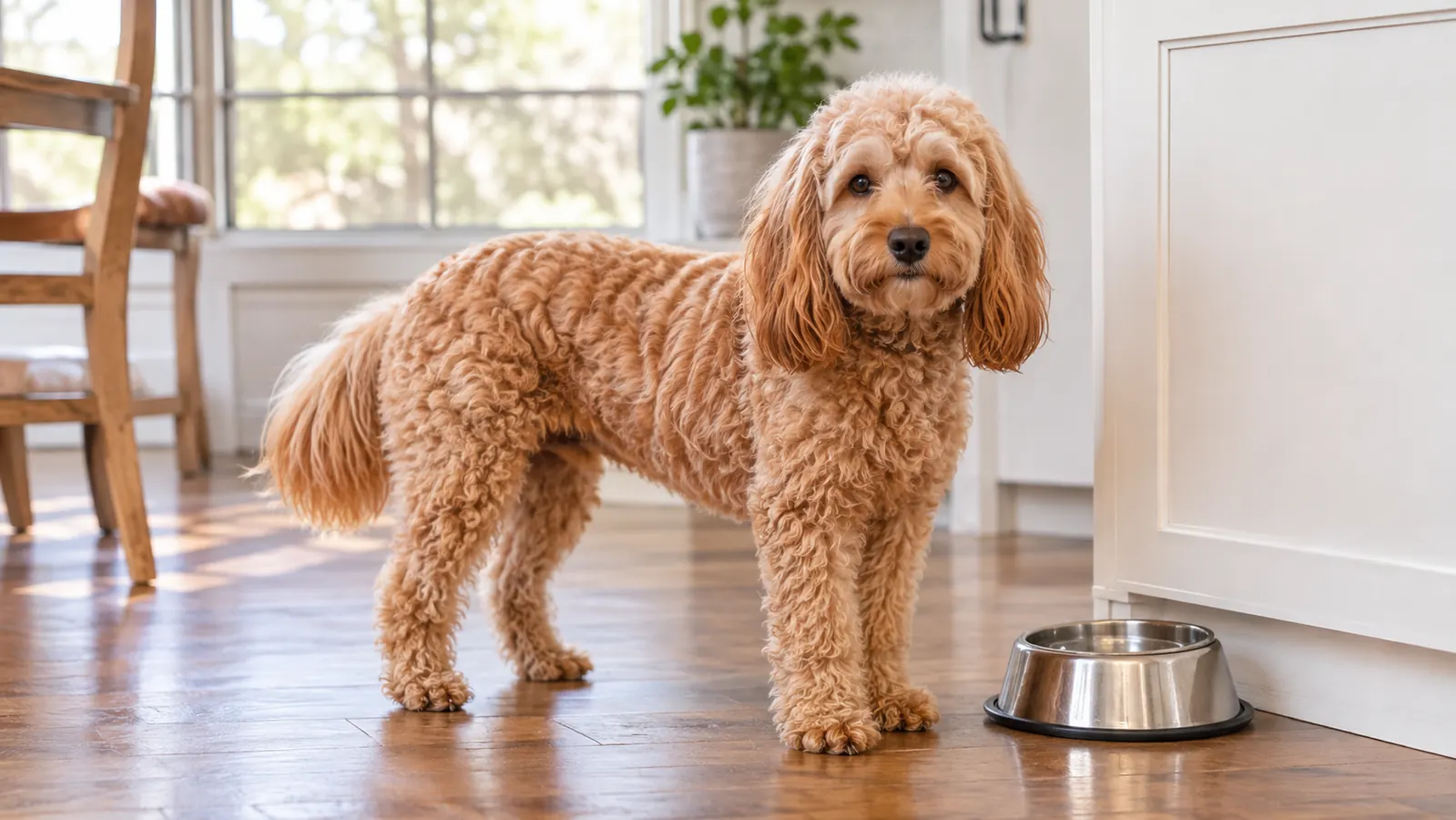
Wally is four years old and weighs sixteen pounds, and his mouth is the smallest part of him. That is the whole reason I ended up standing in my kitchen in Roanoke at fifty-nine, holding a bottle of Oxyfresh in one hand and a finger brush in the other. A small dog's teeth sit close together in a short jaw. There is no spare room in there. Food and tartar collect between teeth that are almost touching, and most of it happens in places a brush cannot reach even when the dog cooperates, which mine does not.
I tried the things you are supposed to try. The finger brush lasted about two weeks before Wally decided his mouth was closed for business. Dental chews he enjoys, but he finishes one in three bites, so that is more of a Saturday habit than a plan. What finally stuck was the least dramatic option on the shelf: a capful of Oxyfresh in his water bowl every morning. Eight months later I can tell you what it did and what it did not do, and I will be honest about both.
The one dental step that survived a busy week at our house
Flavor free, mint free, and measured with the cap. It goes into the water bowl you are already filling every morning.
Amazon Check Today's Price on Amazon →A short jaw leaves nowhere for tartar to hide
Wally's back molars sit close together. On a big dog there is a little more room between them, and on a sixteen pound dog the gaps are tight enough that a brush has to be aimed and held there. That is where the brown line shows up first. A water additive reaches the whole mouth at once, including the spaces between teeth, because the dog is drinking all day whether you are involved or not. Oxyfresh is the one I use. It is not targeted, and that is exactly why it works on the spots I cannot see.
The first sign is usually your own nose, not the vet's chart
In early 2026 Wally jumped up on the couch beside me and I smelled it. Sour, a little metallic. I had been telling myself for months that his breath was just dog breath. Two weeks after I started the additive, it had backed off enough that I stopped noticing it. Not gone. Less. Dr. Reyes had cleaned his teeth in August 2025, so this was not a neglected mouth. It was a mouth seven months past a cleaning, doing what mouths do.
Brushing is better, and I still could not do it
I want to be clear about this, because plenty of articles are not. Brushing is the best thing you can do at home. If your dog tolerates it, keep going and skip the rest of this list. Mine clamped his jaw shut and turned his head into my ribs, and after two weeks of wrestling I quit. A dental routine you actually keep is worth more than a better one you abandon. That is the entire argument for the water bowl.
Every cleaning under anesthesia is a day you would rather not repeat
Dr. Reyes cleaned Wally's teeth under anesthesia in August 2025. It went fine. It was also a day of no food after midnight, a drop-off at seven in the morning, and me watching the phone until they called. Nobody gets out of those. What you can do is make the next one a shorter job and put more time between them. I am not going to tell you that a bottle of anything replaces a cleaning under the gumline. It does not. It is what happens in the months between.
What starts at the gumline does not necessarily stay there
Dr. Reyes has told me more than once that dental trouble in dogs is not only a mouth problem. I am not a veterinarian and I am not going to explain the mechanism to you. Ask yours. What I took from that conversation is that the mouth is worth a few minutes a day for reasons that have nothing to do with how the breath smells. It reframed the whole thing for me. It stopped being a grooming chore and started being health care I could actually do.

A small dog is a long project, and the teeth have to last
A sixteen pound dog who is well cared for often lives into his teens. Wally is four. If I am lucky I have another decade of him on this couch. That is a long time for one set of teeth to work without help. Whatever you choose, the arithmetic favors starting it at four rather than at ten, when the vet is talking about extractions. I wish I had started the water additive the year I brought him home instead of at four.
The water bowl reaches him on the days you do nothing
There are weeks when the brushing does not happen, the Sunday brush-through slides to Monday, and the whole routine falls apart because Tom and I were out of town or I had a cold. He still drinks. That is the practical argument for putting something in the bowl. It runs in the background. On a good week it is a supplement to everything else. On a bad week it is the only thing that happened, and I would rather have that than nothing.
It adds one capful to a job you already do
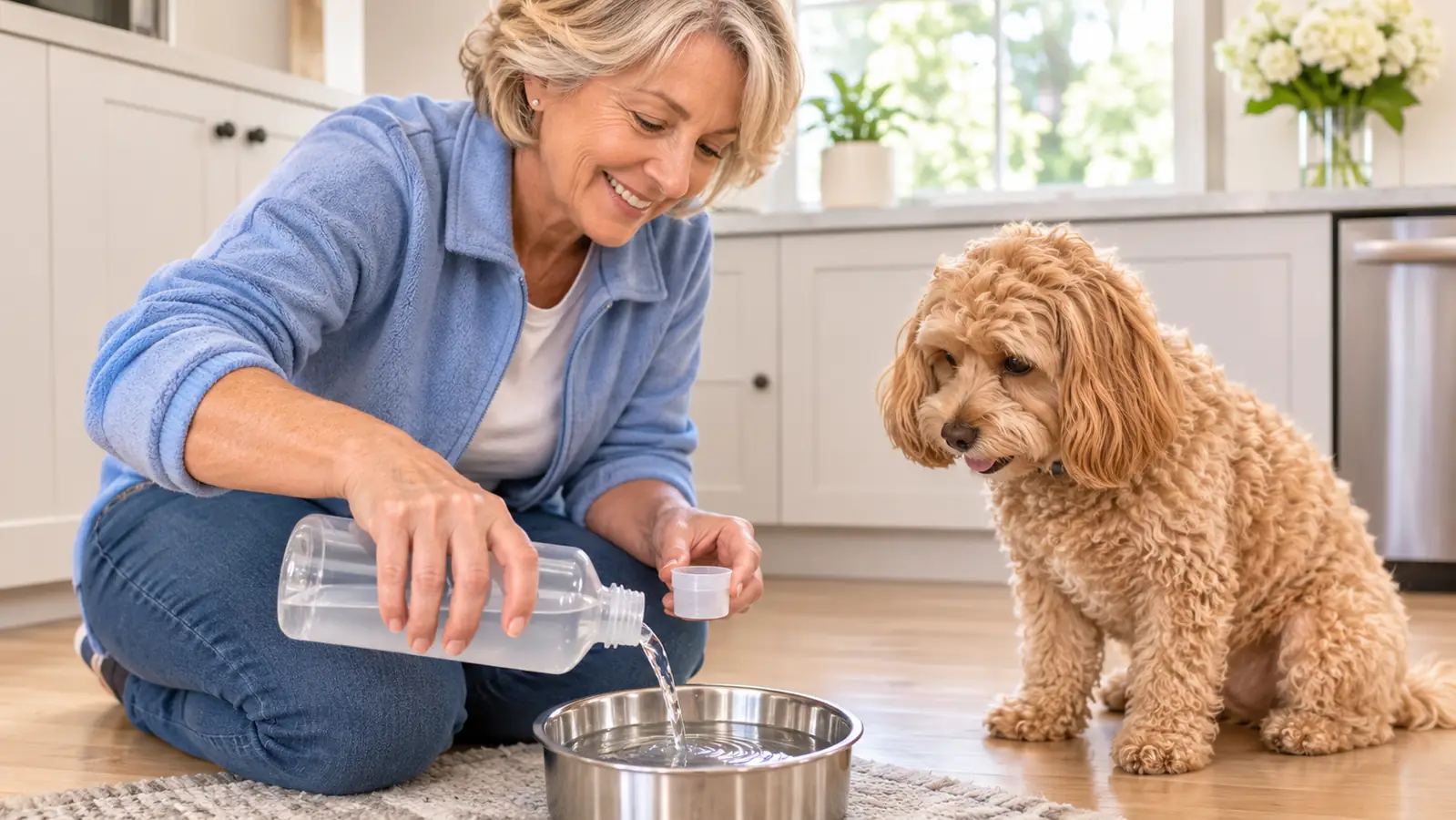
Every morning I dump Wally's bowl, rinse the stainless steel, refill it, and add a capful of Oxyfresh measured the way the label says. That is the whole procedure. The sixteen ounce bottle lives in the cabinet above the bowl, and I reorder when it gets low. There is no new step to remember, because I was already standing at the sink with the bowl in my hand. That is why it lasted eight months when the finger brush lasted two weeks.
Flavor free matters when your dog is fussy
The Oxyfresh label says flavor free, mint free and tea tree free. What that meant at my house is simple: Wally drank normally from the first day. No sniffing the bowl and walking away, no sitting beside it looking at me like I had lost my mind. That is not a small thing. A dog who refuses his water is a worse outcome than bad breath, and a fussy dog is not going to choose mint anyway.
The dog has no opinion about it, and that is the win
There is no wrestling, no holding his mouth open, no soft chew he picks around and leaves on the rug. Wally does not know anything has changed. That is why this one survived eight months when everything else lasted a fortnight. The dental care that helps your dog is the dental care that keeps happening, and the easiest version is usually the one that keeps happening.
What I'd Skip
Things I would skip: a finger brush if your dog clamps his jaw shut, dental chews treated as a whole plan instead of a Saturday habit, and anything that claims to replace a cleaning at the vet. I still take Wally in. The tartar on his back molars still builds. Come next spring I will likely be in the same waiting room with the same knot in my stomach. I would also skip buying three products at once. Pick one thing you will do every single day and give it two months before you judge it. Two weeks is not enough to know anything.
Eight months in, the tartar on his back molars still builds and he still needs Dr. Reyes. What changed is that I stopped smelling sour breath on the couch.
Start with the bowl you are already filling
One capful a day, flavor free, and no new step in your morning. It will not replace your vet. It does the part you can do at home.
Amazon Check Today's Price on Amazon →