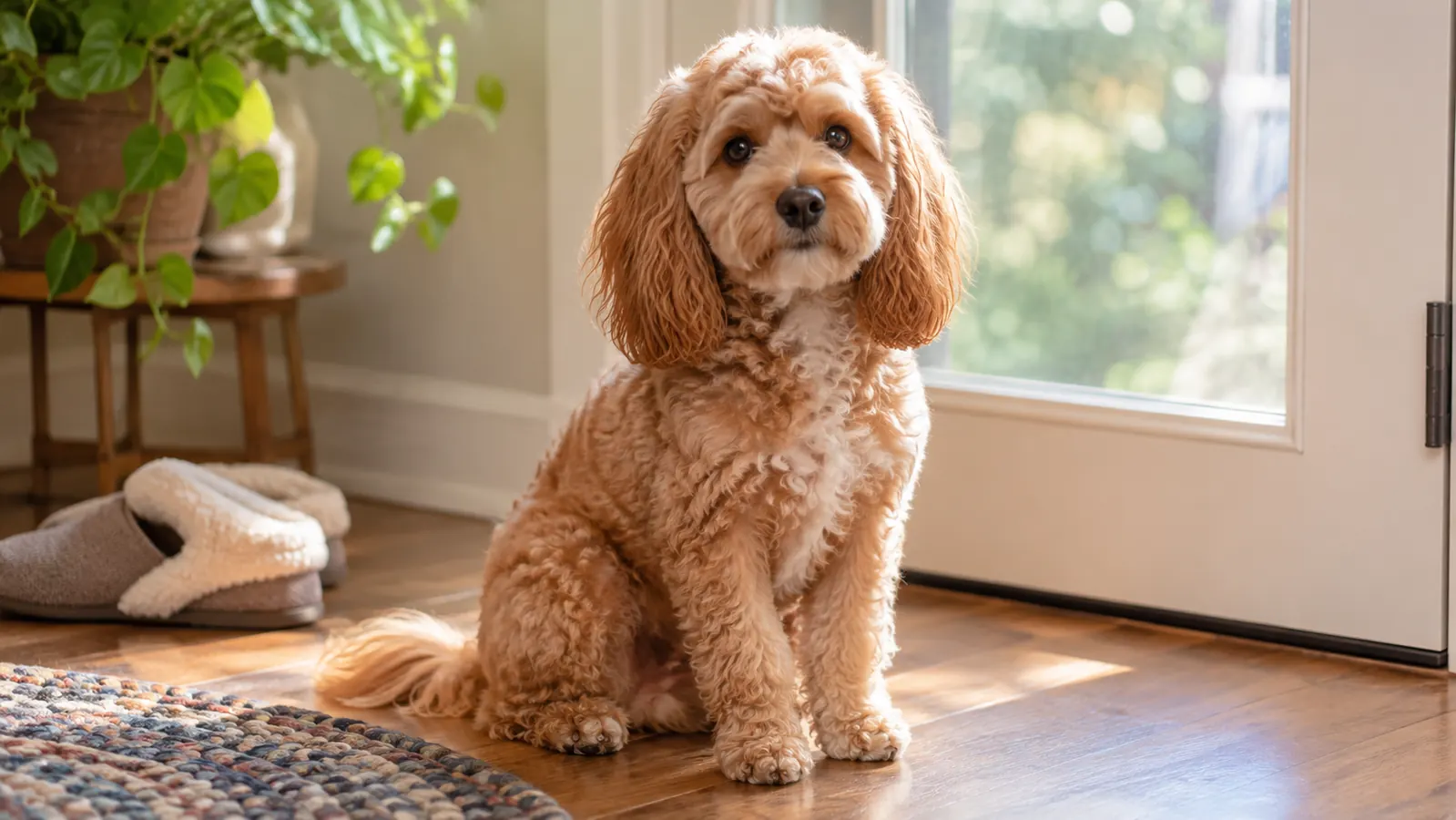
Wally is a 4-year-old Cavapoo, 16 pounds, apricot curls, ears that hang almost to his jaw. I have owned a Coastal Pet Li'l Pals slicker brush for about fourteen months. Before that I used the big pin brush that came in his puppy kit, from the spring of 2022 until September 2025, and I thought it was fine. It was not fine. It slid over the top of the curl, looked like progress, and left the real work underneath for Dana, our groomer, every six weeks.
This is not a piece about a brush changing my life. It is ten specific reasons a small slicker brush suits a coat like Wally's, in the order I would tell a neighbor standing in my driveway. If you have a big dog, or a coat that does not curl, several of these will not apply to you. I say which ones below, and I say what I would skip.
The brush that lives in my kitchen drawer, not in the grooming bin
Coastal Pet Li'l Pals slicker, 3.25 by 7.25 inches, made for small breeds and puppies, with plastic tips on every wire pin. The one thing it will not do is take out a tight mat. Every other reason on this list, it does.
Amazon Check Today's Price on Amazon →It is 3.25 by 7.25 inches, which is roughly the size of the dog
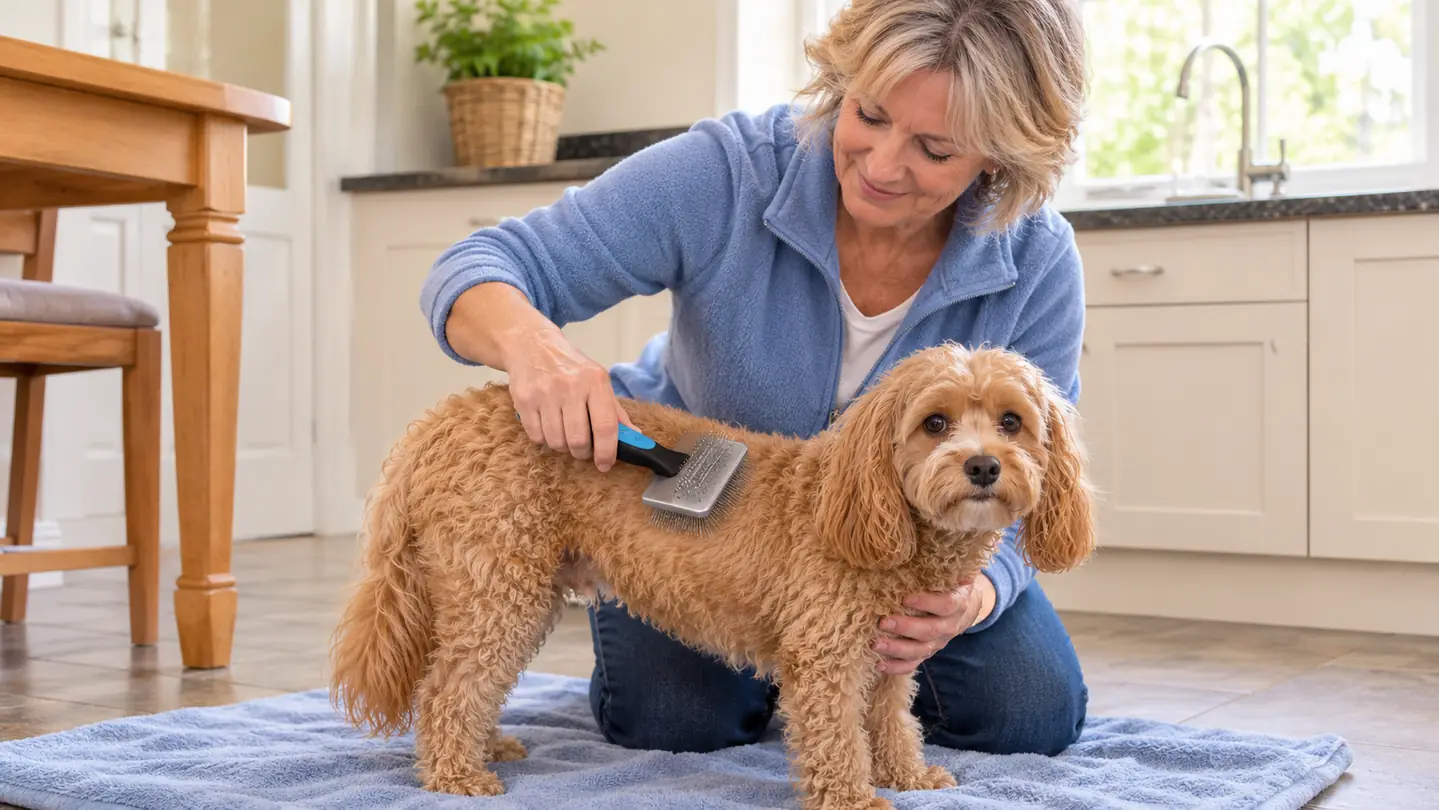
The Coastal Pet brush is listed at 3.25 inches across and 7.25 inches long, and it weighs under an ounce. On a 16 pound dog that matters more than any feature list. A full size brush covers half his ribcage in one stroke and I cannot feel where the pins are landing. This one I can steer. I work a section the width of my palm and then move on, and about fifteen minutes gets me from the back of his neck to his tail.
Flexible wire pins follow the curl instead of skating over it
The listing calls them flexible wire pins. What that means in your hand is that the pins give a little when they meet a knot instead of jamming straight into it. My old pin brush had long stiff pins, and it did a lovely job of smoothing the surface of a curl. A slicker with shorter pins set closer together gets underneath that top layer. That is the entire difference between a coat that looks brushed and a coat that is brushed.
Plastic coated tips let me work closer to the skin than I used to
Every bristle on this brush has a plastic tip. I have not once found a scratch on Wally from it, and I brush him on a Sunday evening when I am tired and not paying perfect attention. I still do not press. Light strokes, let the pins do the work. If you lean into it, a wire pin will scrape even with a coating on the end. That is a habit problem, not a brush problem.
It gets behind the ears, which is where the mats actually start
Wally mats behind his ears first, every single time. The hair there is fine and it rubs against the ear leather all day. The small head of this brush fits into that hollow behind the ear without folding his ear back on itself. Two minutes per ear on a Wednesday is my whole midweek routine. About five weeks in, the mats behind his ears were noticeably smaller, and that was the first thing that made me think Dana had been right.
It reaches the armpits without a wrestling match
The other spot is his armpits, up under the front legs. He does not care to be handled there and he will pull a leg away and give me a look. A brush the size of my hand lets me get in and out in three strokes instead of arguing about it. I lift the leg, brush with the direction the hair grows, put the leg down, done. A bigger brush would mean holding him still longer, and he would win that argument.
The whole Sunday session takes fifteen minutes, and it happens before the ears
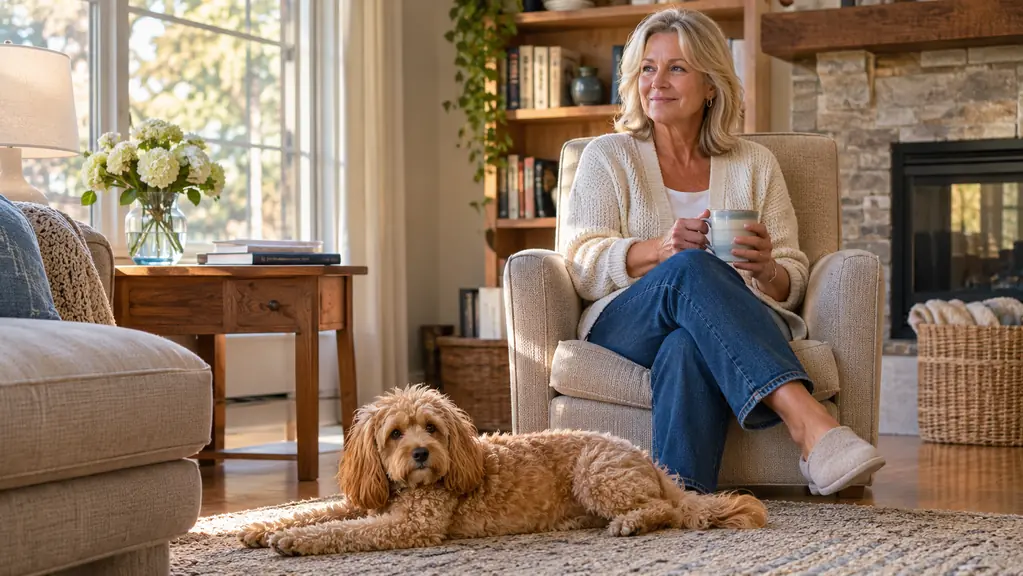
Sunday evening is the routine in this house. Brush through first, ear cleaning second, both of us on an old towel in the laundry room. I put the brush back in the kitchen drawer by the back door when we are finished. It is not a schedule anyone needs to admire. It is a schedule I actually keep, which is the only kind that does a coat any good.
By the second groomer visit, Dana stopped mentioning mats at all
This is the result I would want a neighbor to hear. About five weeks in I noticed the mats behind his ears were smaller. By his second grooming appointment after I started, roughly twelve weeks, Dana did not bring up mats. She had brought them up most visits for three years. I will also say the plain part: this brush did not remove one single tight mat. Dana did that. What the brush did was keep new ones from forming between visits.
Loose hair ends up in the pins instead of on the couch
The listing says it removes loose hair, and it does. After each session I pull a wad of undercoat out of the pins and drop it in the bin. Before, that hair went onto the couch and the rug and I vacuumed twice as often as I do now. The pins hold what they lift, which is more than I can say for the old pin brush, which seemed to gather hair and then hand it right back to him.
It spreads his natural oils, so the coat sits softer afterward
The listing mentions stimulating natural oils and distributing them evenly for a soft coat. I cannot see inside a hair follicle, so take that part for what it is worth. What I can tell you is that the coat he has after a full brush through is softer under my hand than the coat he has after a bath. Some of that is likely the oils moving down the hair. Some of it is likely just that the dead hair is gone.
It fits in a drawer, so it is there when you notice a knot
The brush lives in the kitchen drawer by the back door, next to the scissors and the spare leash. It weighs under an ounce, it does not need a case, and it does not take up counter space. The best grooming tool is the one within arm's reach the moment you feel something behind an ear. This one is, and that is most of why it gets used.
What I'd Skip
If you are standing in a store wondering what else to put in the basket, skip the grooming table. Wally stands on a towel on the laundry floor and we are finished in fifteen minutes. Skip the detangling sprays, at least to start. I bought one early on and never needed it once I had a brush that reached the skin. And skip a second brush. Between this slicker and a plain steel comb I already owned, the coat gets handled, and the comb is what tells me whether I actually finished the job.
What I would skip buying again is the big pin brush, though I did not know that for three years. I would also tell you to skip this brush entirely if your dog is much over 25 pounds, because the head is small and you will be brushing until dark. And skip it if you are hoping to work out a tight mat. You will hurt your dog and ruin the pins. Dana cuts those out, and that is the correct arrangement. If your dog's coat does not curl, a slicker may still help with loose hair, but most of what I have written here will not be your experience. Ask your groomer what your coat actually needs before you buy anything, the way I should have asked in 2022. One more thing, and then I will stop: red, warm, or smelly ears are a question for your vet, not a grooming question. Ours go to Dr. Reyes.
By his second grooming appointment after I started, about twelve weeks, Dana did not bring up mats. She had brought them up most visits for three years.
Start behind the ears on a Wednesday and you will know in two minutes
Brush the hollow behind one ear with light strokes and look at what comes out in the pins. If the coat lies flat again and there is hair in the brush, you have your answer. That is the test I would run before buying anything for a coat like this.
Amazon See the Coastal Pet slicker on Amazon →